OneByte Global
2025
My Role
Lead Designer - UI/UX Design Interaction Design, Prototyping.
Team
Me as Designer, Satyam as product manager and Amit as front end developer
Timeline
Sep 2024 - May 2025
Overview
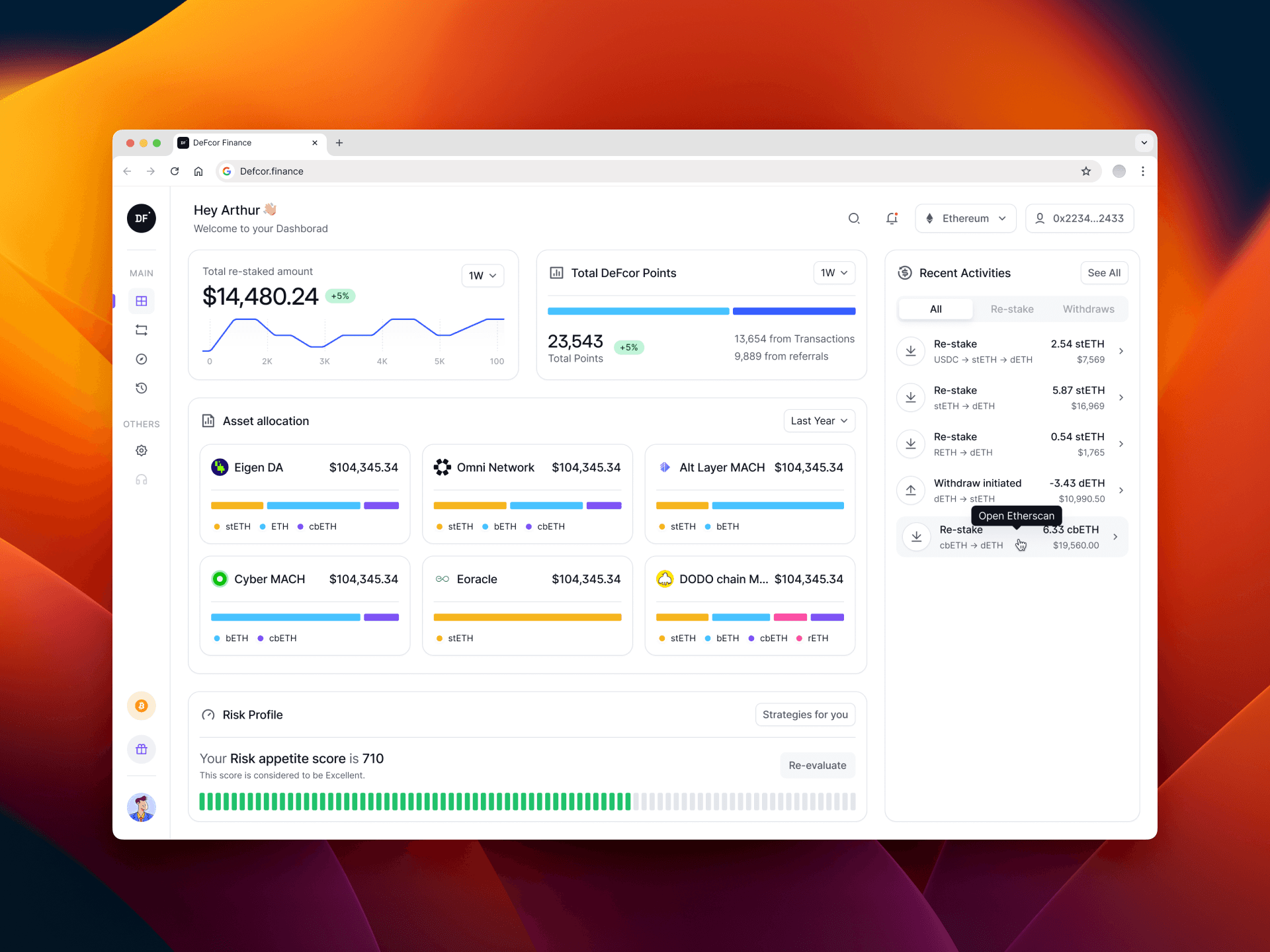
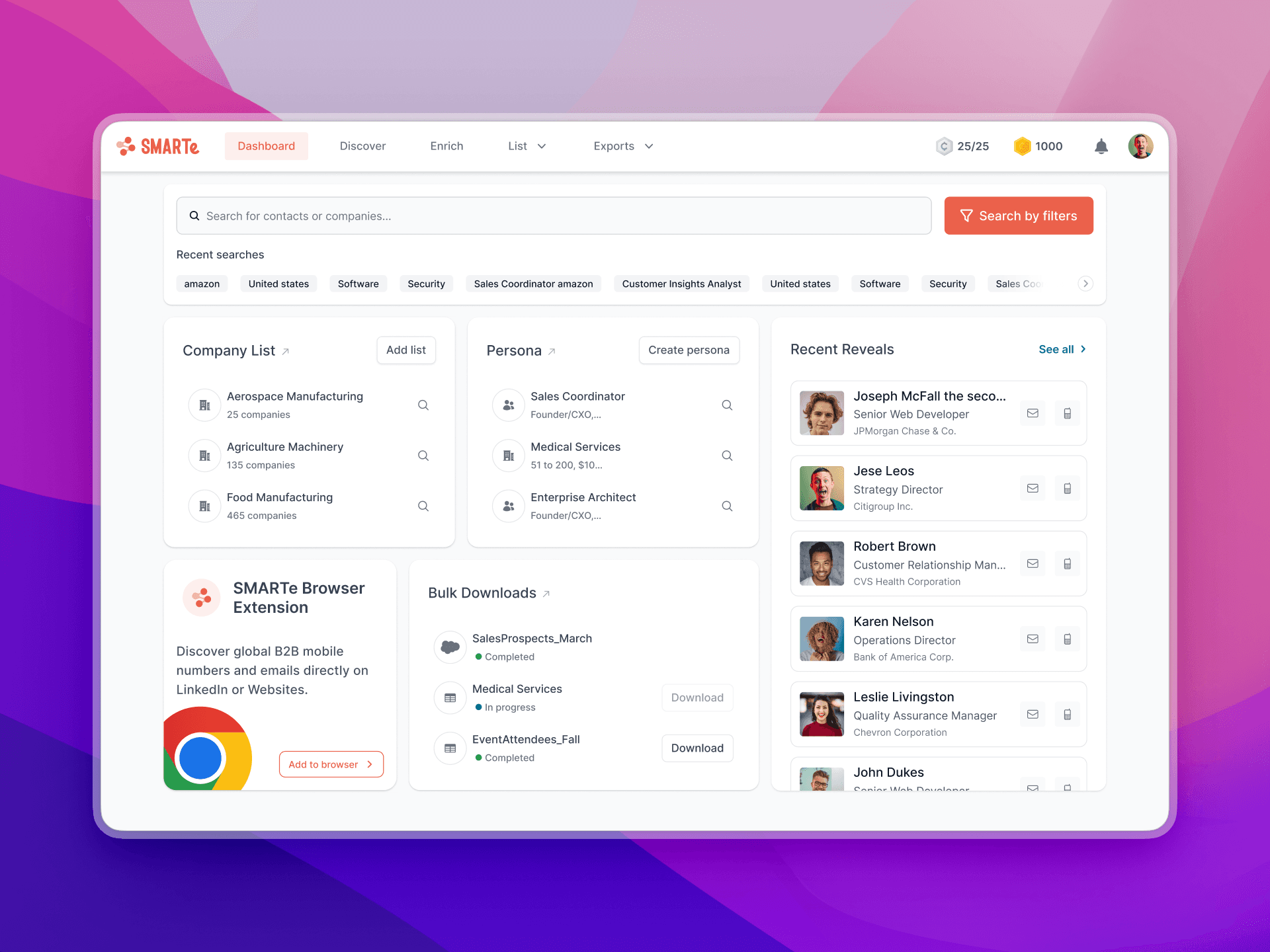
0xBridge is the second product developed by the same team behind DeFcor, leveraging a shared design system and development resources to accelerate execution. While DeFcor focused on stablecoin infrastructure, 0xBridge tackles a much larger and long-standing challenge — unlocking Bitcoin’s liquidity for DeFi. Despite Bitcoin's massive market cap, over 99% of BTC remains untapped, due to poor programmability, fragmentation of wrapped BTC assets, and reliance on custodial bridges. 0xBridge was built to change that.
Our Goal |
To make BTC the world’s most useful and valuable asset — by enabling non-custodial, uncensored, two-way transfers of native BTC across chains like Ethereum, Solana, and TON.
What Was the Problem? |
Bitcoin holds over $1.2 trillion in market cap, yet 99% of it remains untapped in the world of decentralized finance. While Ethereum and other smart contract chains power the majority of DeFi activity, Bitcoin struggles to participate due to:
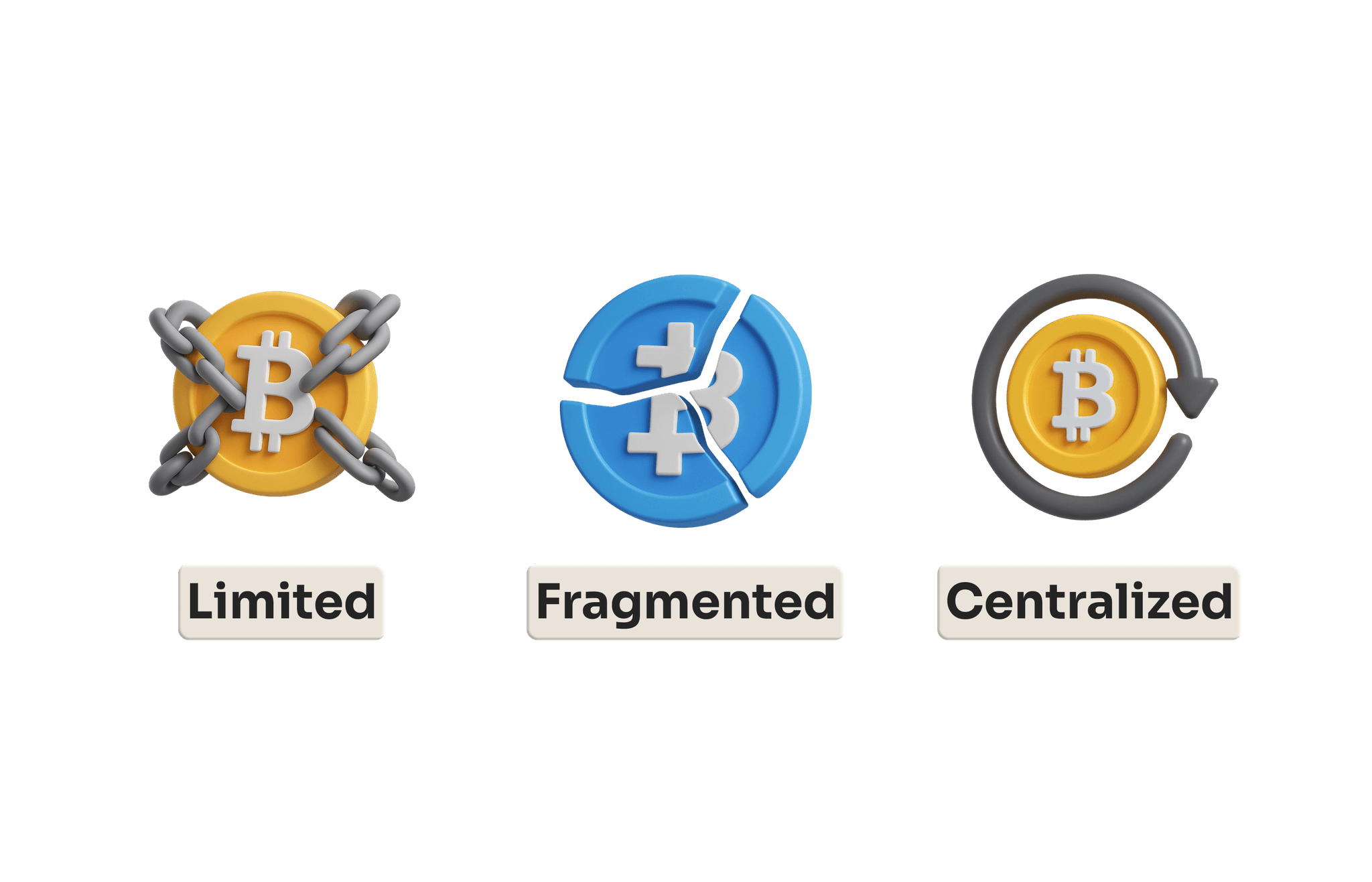
Key Challenges
Limited Programmability
Bitcoin’s design isn’t optimized for smart contracts, making native DeFi on Bitcoin slow and fragmented.
Liquidity Fragmentation
Multiple incompatible wrapped BTC tokens (like wBTC, tBTC, cbBTC, fBTC) have led to scattered liquidity across chains, hurting composability.
Custodial Risks & Censorship
Most bridges rely on centralized custodians or opaque networks, putting users’ funds at risk and limiting censorship resistance.
Despite its value, Bitcoin remains largely isolated — disconnected from the broader DeFi ecosystem it helped inspire.
Approach
Designing for Confidence in a Trustless System
Most Bitcoin users are deeply cautious — and rightfully so. Sending BTC across chains, especially in a non-custodial setup, brings high anxiety and high stakes. So instead of trying to simplify the system technically (which wasn't possible), we simplified it visually and behaviorally.
Our approach revolved around:
Breaking down complexity into understandable steps
Building visual trust through transparency
Letting the UI mirror user expectations from both BTC and EVM norms
Creating room for education, feedback, and fallback — without bloating the flow
Key Design Principles
Progressive Disclosure
Only show what’s necessary at each step — no advanced AVS details unless needed.
Upfront Clarity
All costs (platform fee, network fee, final output) shown before any wallet prompt.
Visible Status at Every Stage
Users always see what’s happening in their transaction: which chain, which step, how long left.
Microcopy that Calms, Not Confuses
From tooltips to friendly copy (“Why isn’t Max the full balance?”), everything educates, not intimidates.
Design & Iteration
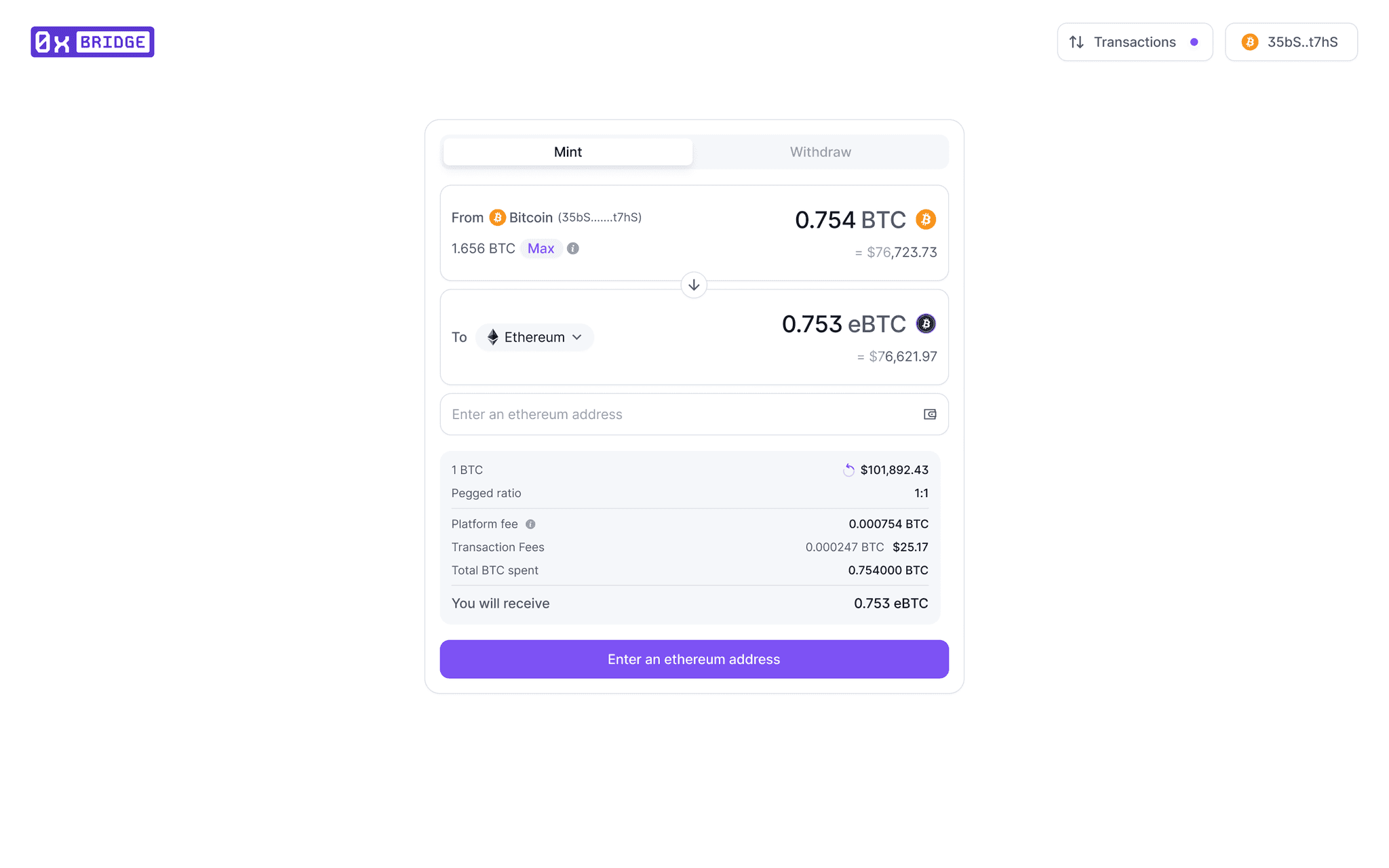
Bridging Complexity with UX Precision
The core 0xBridge experience was built with a strong foundation — but over time, we introduced several critical UX enhancements to make bridging BTC feel safer, faster, and more predictable.
Below is a full product demo walkthrough — followed by key highlights from our iterative design process
Key UX Enhancements
1. Transaction Tracker (Live Status Panel)
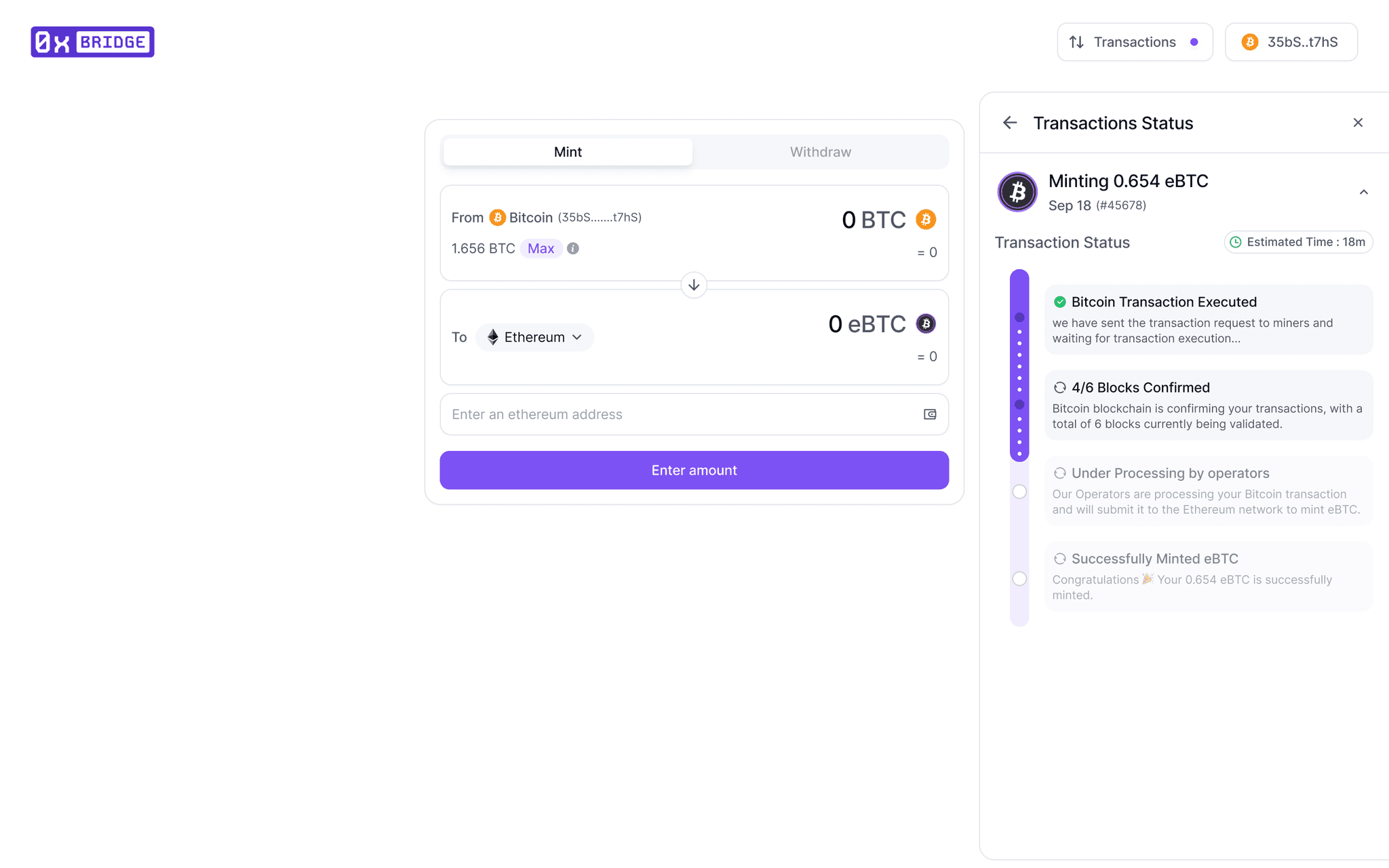
We introduced a full-screen side panel to break down every step in the minting/withdrawal journey:
Transaction initiation info
Block confirmations
Operator execution
Mint/burn confirmation
This boosted user confidence and removed the “clueless” feel of previous crypto bridges.
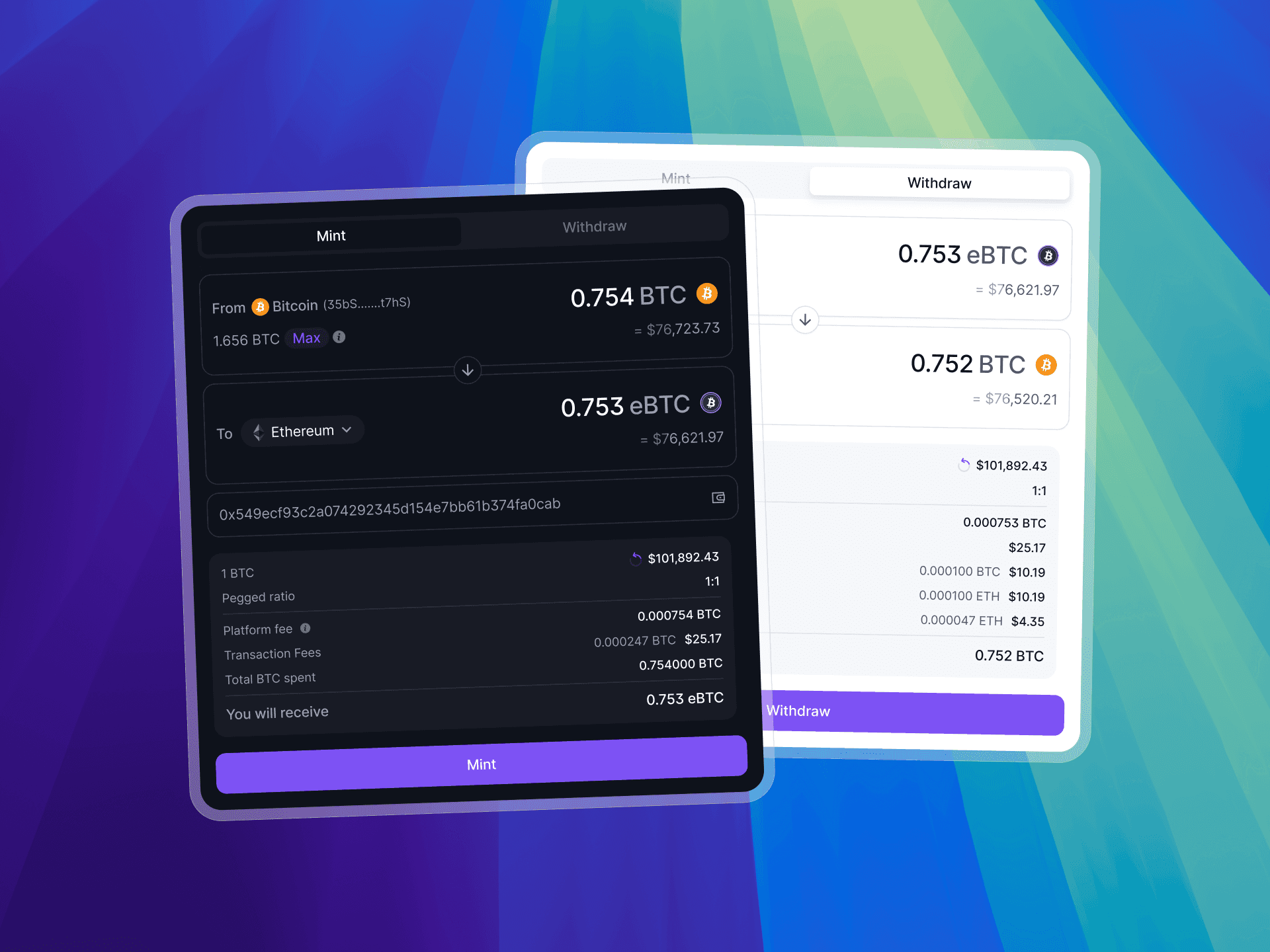
2. Transparent Fee Breakdown
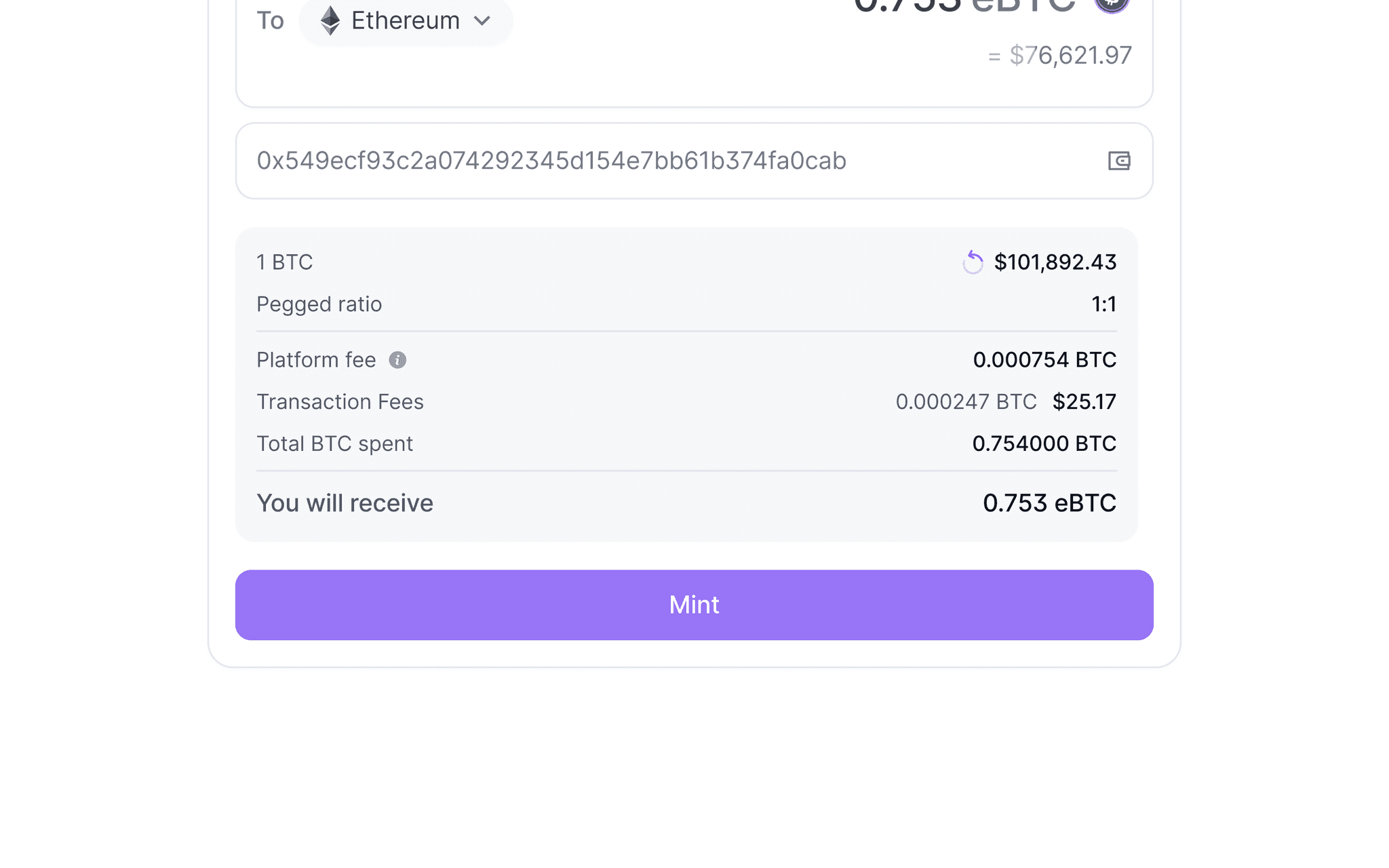
We layered in a clear, dynamic breakdown of:
Platform fees
Estimated transaction fees (BTC + EVM)
Pegged output preview
This made bridging feel more honest and fair, especially to users cautious of hidden gas costs.
3. Human-Friendly Tooltips
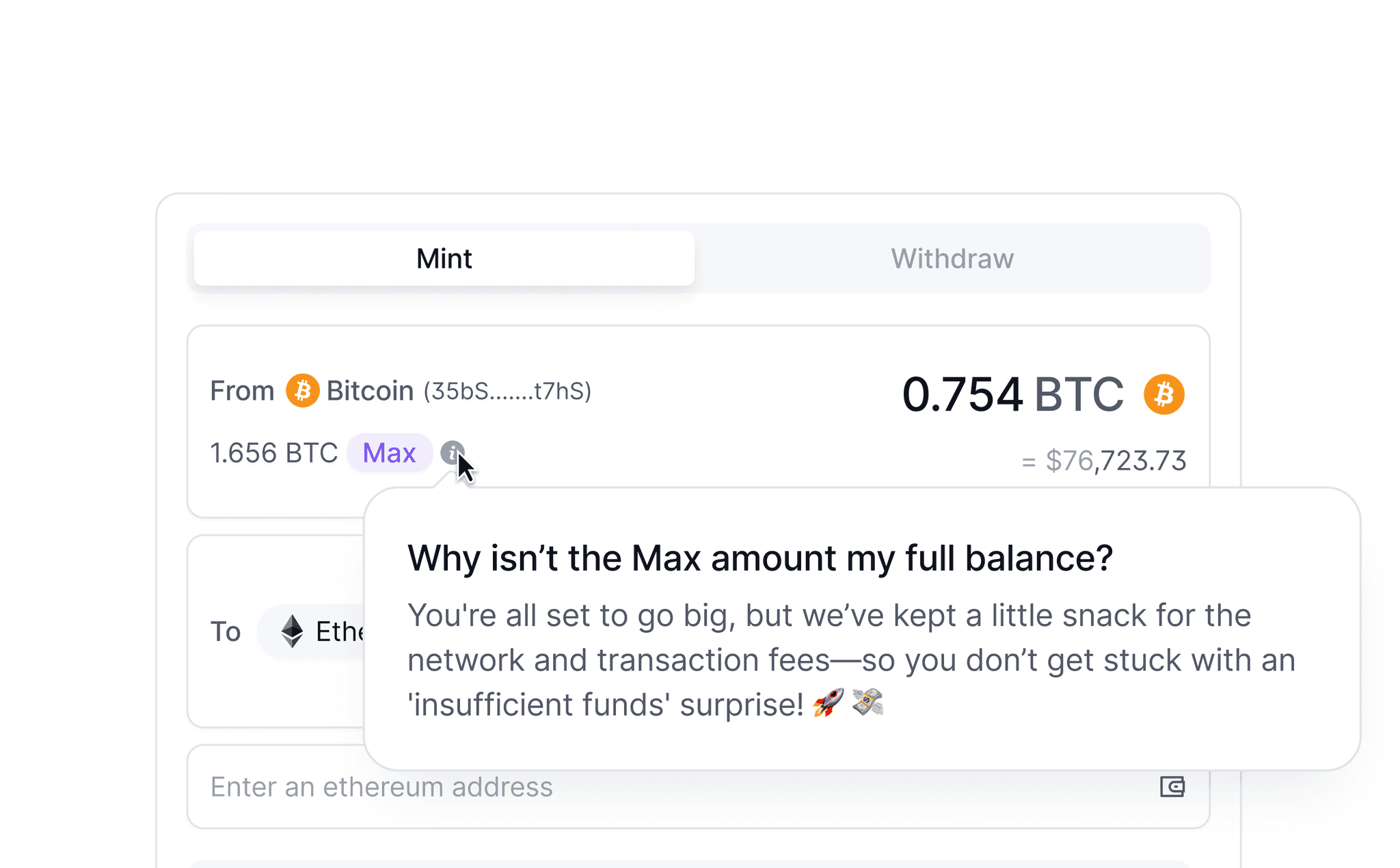
Instead of generic help text, we used casual, calming & fun tooltips to reduce friction and explain decisions.
4. Integrated Transaction History with Edge Cases
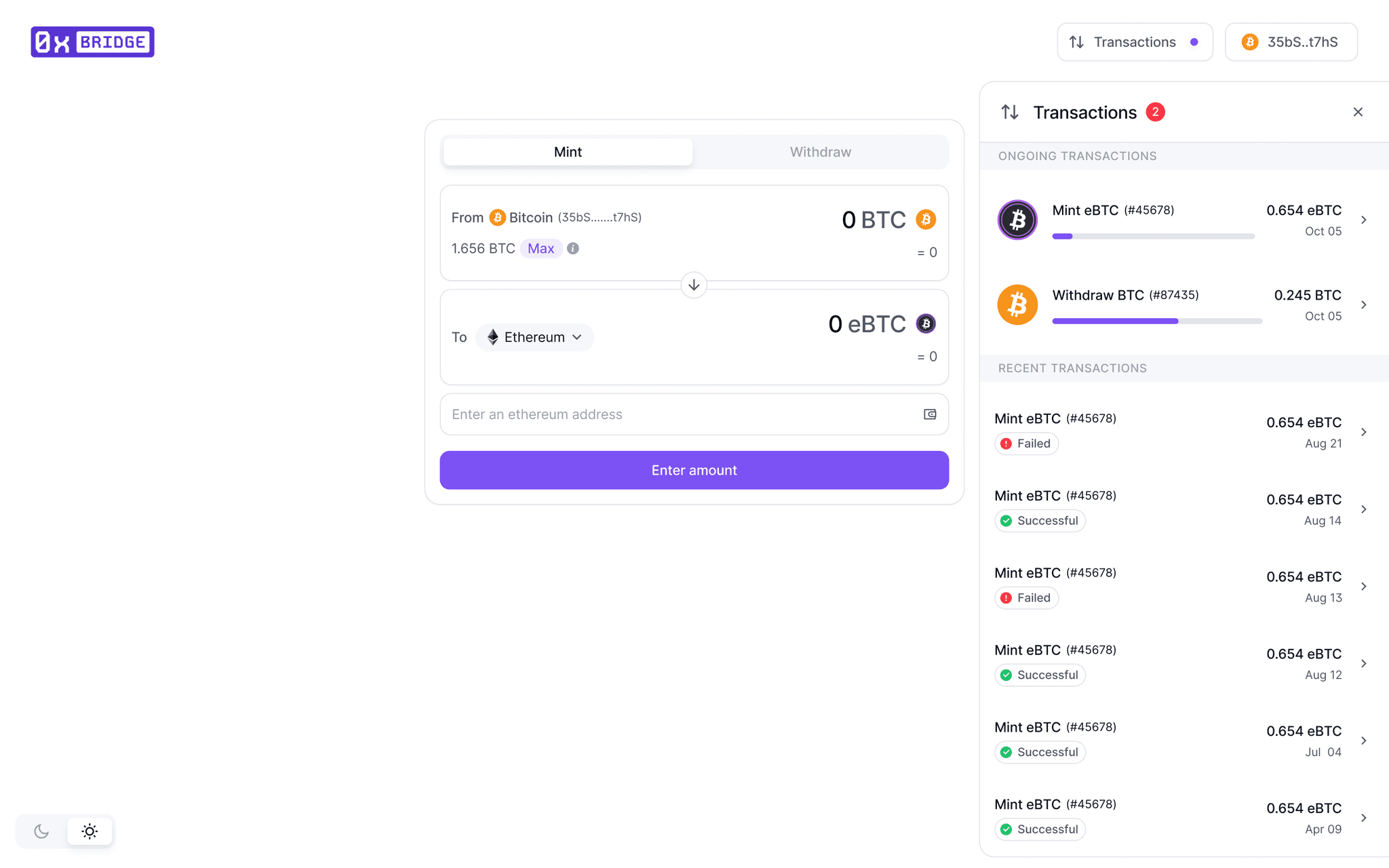
We built a unified transaction view for both ongoing and past operations — including failed states and retries. This helped users track intent and outcome without needing to leave the interface.
Outcome
Our focus on simplicity, trust, and progressive transparency paid off — users were able to complete complex mint and withdrawal flows without needing prior experience with Taproot, PSBTs, or AVS infrastructure.
What We Achieved
Users completed mint/withdraw flows with minimal guidance
Despite the technical backend, most users were able to complete the bridging flow using only the product UI — no external docs or tutorials were needed.
Transaction status reduced confusion
The live progress panel helped users understand delays in BTC confirmations and AVS validation, especially for first-time bridge users.
Tooltips deflected repeated questions
Small clarifications like “Max balance” or “Fee breakdown” resolved the kind of doubts that typically show up in user support chats.
The product felt trustworthy, even when things failed
By clearly surfacing failed states and ongoing transaction visibility, users felt informed instead of abandoned — especially important in a high-value asset like BTC.
“It just works and it tells you what’s happening. That’s all I want from a BTC bridge.”
— Feedback from early beta user
Reflection
Designing 0xBridge was less about inventing new patterns — and more about making the invisible feel understandable.
Even though we had a strong design system and prior learnings from DeFcor, this product pushed us to think deeper about:
Clarity without oversimplifying
The tech (Taproot, PSBTs, AVS) was complex — but dumbing it down would risk misleading users. The real challenge was to surface the right amount of information at the right time.
Designing for failure states from day one
With BTC confirmation times and cross-chain interactions, things will go wrong. Building for those scenarios early helped reduce friction later.
How much UI is “enough” for trust
A surprising learning: users didn’t want more control — they just wanted more visibility. Showing what’s happening under the hood (e.g., network ops, AVS signing) built more trust than giving extra toggles or settings.
Design maturity = fewer decisions, better defaults
Thanks to the shared system from DeFcor, we spent less time debating visual choices — and more time improving user experience through edge cases, flows, and copy.
This project helped me sharpen how I think about product design—not as a sequence of pretty screens, but as a system that builds confidence through every interaction.
What I’d Do Differently?
If I had more time, I would’ve focused on testing with real Bitcoin users earlier, not just crypto-native DeFi users.
Their mental models — especially around custody, confirmations, and trust — are very different, and we could’ve uncovered more specific copy and interaction improvements.
I also think we could’ve pushed harder on mobile-first optimization, since many of our early testers accessed the bridge from mobile wallets like UniSat or Trust Wallet.
That said, the project gave me a deeper appreciation for balancing technical integrity with UX clarity — especially in products where one misstep could mean lost funds.
Closing notes
If you’ve made it this far—thank you for taking the time to read through my case study. I’ve poured a lot of thought, effort, and care into this work, and I hope it gave you a glimpse into how I approach product design when it truly matters.

Akash Singh
Product designer
Check other works